The problem behind the system.
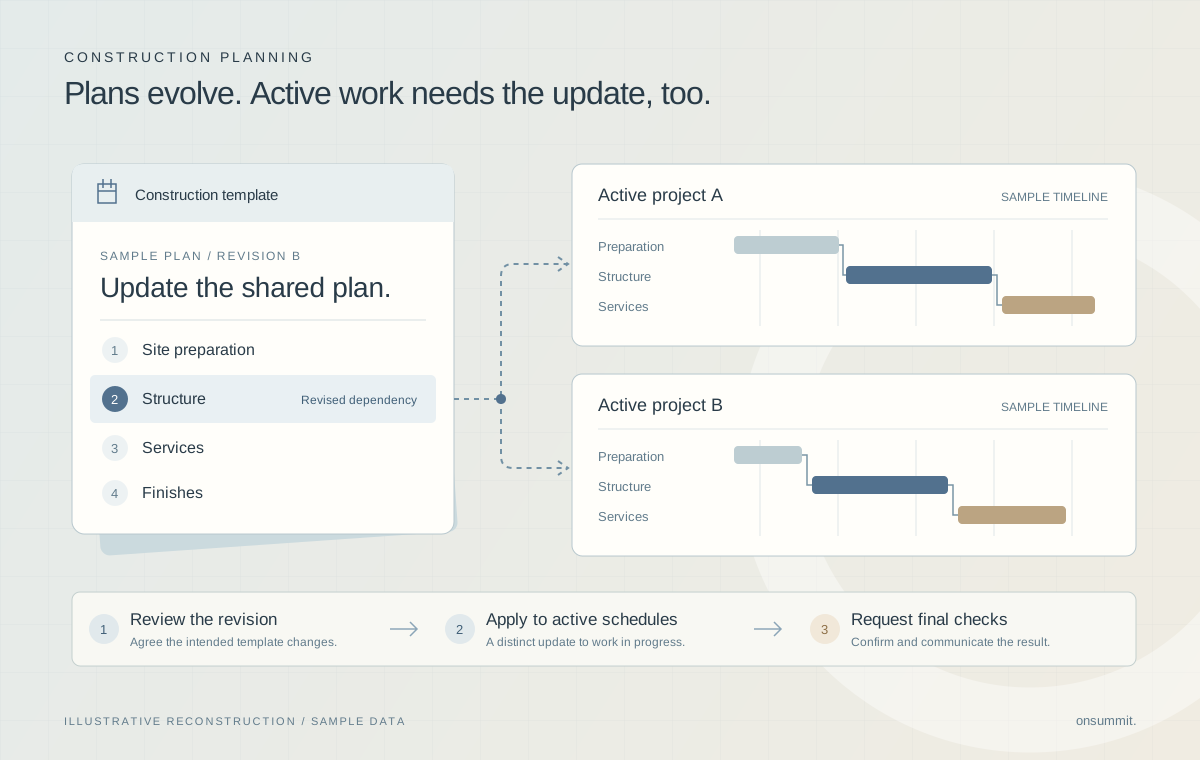
Construction schedules need to reflect different home tiers and task dependencies. When a planning rule changes, future projects can use a revised template, but projects already underway need a separate update. The business needed to carry template changes into active schedules while giving project stakeholders a chance to review them.
- Different construction plans need distinct template content and dependencies.
- Updating a template and updating an existing project schedule are separate operations.
- Technical propagation does not by itself establish that every project team has reviewed and adopted the revision.
Team contribution
This example comes from a prior consulting engagement delivered with a wider consulting and client team. The delivery team revised TaskRay schedule templates, coordinated stakeholder review and propagated the changes to active construction schedules. This story is limited to that template-update work; newer permit-orchestration services and later client technology-team enhancements are separate contributions.
The decisions that shaped the work.
Keep variation in the planning model.
Different construction tiers cannot always use the same sequence of work or the same template details.
The work maintained and revised multiple TaskRay schedule templates. Template review let stakeholders consider the intended plan before applying changes to existing schedules.
Design consideration. Template variants support real differences in the work, while creating several plans that need coordinated maintenance.
Treat active-project updates as their own delivery step.
A corrected template can help future projects while leaving schedules already in use unchanged.
The delivery explicitly included propagation to schedules in flight, in addition to the template revisions themselves. The team reported that active schedules had been updated.
Design consideration. Updating active work requires attention to the affected schedules. This story does not imply that every future template change propagates automatically.
Separate technical completion from business rollout.
An update reaching the system is not the same as every project manager knowing about it or confirming the result.
Stakeholder review preceded propagation, and the delivery team requested final checks after confirming the updates. Business communication remained a distinct part of the rollout.
Design consideration. The documented result is template propagation. It does not establish universal acceptance or a measured reduction in schedule maintenance.
What the system delivers
- Revised schedule templates for different construction plans.
- Template changes applied to schedules already in use.
- Stakeholder review before the update and final checks requested afterward.
Technical implementation
- TaskRay provides the template and project-scheduling foundation on Salesforce.
- The work addressed template content, dependencies and updates to schedules already in use.
- Separate review and propagation steps connected configuration changes to the project-management process.